Back pain is one of the most common complaints during pregnancy — and, for many women, it does not simply disappear after delivery. Whether you are navigating the third trimester or still managing discomfort months after welcoming a baby, understanding the structural reasons behind spinal pain during this phase of life is the first step toward genuine, lasting relief.
This article explores the specific mechanisms that make the spine vulnerable during pregnancy and in the postpartum period, and explains the non-surgical treatment options that support safe and effective recovery.
Why Pregnancy Places Unusual Demands on the Spine
The human spine is not designed to accommodate a 10-15 kg shift in front of the body over the course of nine months. Yet that is exactly what pregnancy asks it to do. As the uterus expands, the body’s centre of gravity moves forward, placing increasingly intense strain on the lumbar vertebrae, sacroiliac joints, and the deep stabilising muscles of the core.
A hormone called relaxin, produced in large quantities during pregnancy, loosens ligaments throughout the pelvis and lower spine to prepare the body for labour. While this is entirely necessary for childbirth, it also reduces the structural stability of joints that ordinarily keep the spine aligned. The result is that the vertebrae are more vulnerable to misalignment during a period when the mechanical load is at its highest.
Several distinct patterns of spinal discomfort arise during pregnancy:
- Lumbar back pain: aching in the lower back, often worsening with prolonged sitting or standing
- Pelvic girdle pain: sharp or burning sensations across the sacroiliac joints or pubic area
- Sciatica: shooting pain radiating from the lower back through the buttock and into one leg, caused by nerve compression as the pelvis shifts
- Thoracic strain: upper and mid-back tension caused by postural compensation as the chest broadens and posture adapts
The Postpartum Period: When Pain Lingers Longer Than Expected
Many women assume that once the baby arrives, back pain will resolve on its own. For some, it does. For others, postpartum spinal pain persists or even intensifies, driven by a new set of physical demands.
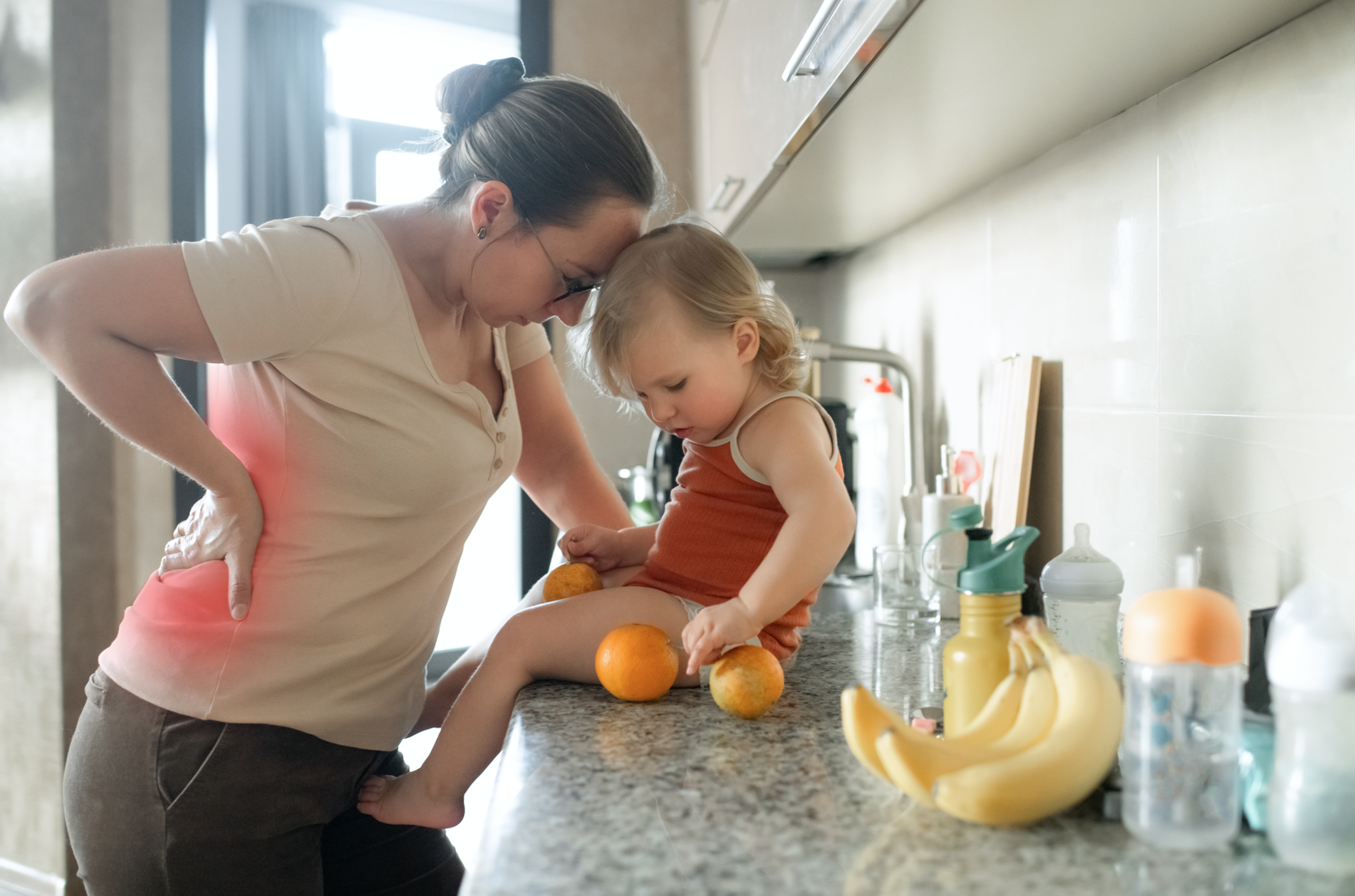
Feeding positions, carrying a baby for extended periods, and the sudden return to household activity following birth all place repetitive strain on a spine that is still carrying relaxin in its system for several weeks after delivery. Abdominal muscles that were stretched and separated during pregnancy (a condition called diastasis recti) offer reduced core support, shifting excess load to the spinal column and surrounding musculature.
Sleep deprivation further compounds the problem. When a new mother is not sleeping adequately, muscle recovery is impaired, pain thresholds drop, and the neurological system becomes more sensitised to discomfort. What might otherwise be mild postural strain becomes chronic, unrelenting back pain.
Safe and Effective Treatment During and After Pregnancy
Physiotherapy-Led Rehabilitation
Targeted physiotherapy remains one of the most effective interventions for pregnancy-related spinal pain. A skilled physiotherapist can work within the physical constraints of pregnancy, identifying the specific joints and muscles contributing to the problem and prescribing gentle exercises that restore stability without placing the baby at risk.
Core strengthening exercises adapted for pregnancy — such as modified Pilates and pelvic floor work — help rebuild the internal scaffolding that supports the lumbar spine, reducing load on the vertebral column as it adapts to the changing body.
Manual Therapy and Spinal Mobilisation
For women experiencing acute spinal discomfort, non-surgical spinal care at ANSSI Wellness offers gentle mobilisation techniques suited to the postpartum body. Specific soft tissue work around the sacroiliac joints and lumbar vertebrae can provide significant relief without medication or invasive procedures.
Postural Retraining
Postural habits formed during pregnancy — leaning back to counterbalance an expanding abdomen, for example — often persist after delivery. Postural retraining involves learning how to correctly distribute weight across the spine during feeding, carrying, lifting, and daily movement, reducing the cumulative strain that perpetuates back pain.
Warning Signs That Need Prompt Attention
While most pregnancy and postpartum back pain is mechanical and responds well to conservative care, certain symptoms warrant immediate medical attention:
- Severe or sudden lower back pain accompanied by leg weakness or bladder changes
- Pain that is constant and not relieved by rest or positional change
- Fever combined with back pain, which may indicate infection
- Pain following a fall or trauma
If any of these symptoms are present, seek a medical evaluation without delay.
Building a Recovery Plan That Lasts
Postpartum recovery is not linear. Some weeks will feel like genuine progress; others will involve setbacks. A well-structured, professionally guided rehabilitation plan accounts for this variability and builds resilience into the process.
Women who seek structured spinal rehabilitation through clinics like ANSSI Wellness — with expertise in non-surgical back and spine care — consistently report faster resolution of chronic postpartum pain and a reduced risk of recurrence. The key is not waiting until the pain becomes debilitating, but seeking guidance as soon as symptoms begin to interfere with daily life.
Your spine carried an extraordinary load throughout pregnancy. It deserves the same dedicated care and attention in recovery.
Conclusion
Back pain during pregnancy and the postpartum period is far more than a minor inconvenience. It reflects real structural and neurological changes in the body that deserve professional attention. Understanding why this pain occurs, recognising the postpartum factors that sustain it, and seeking qualified non-surgical care early are the three pillars of a strong, lasting recovery. Mothers who prioritise their spinal health recover better, move better, and are able to give more fully to the people who need them most.